

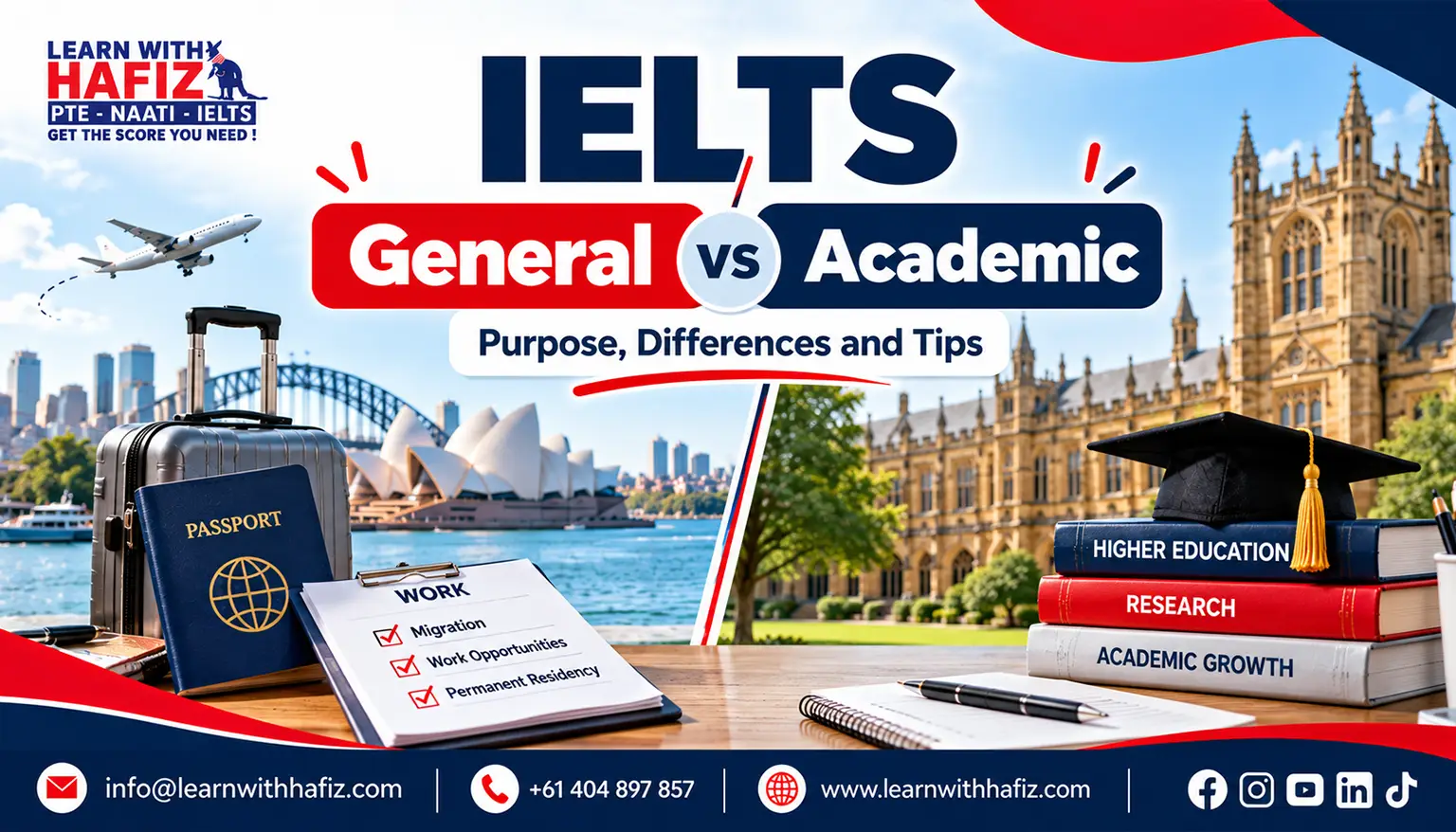
Choosing between IELTS General vs Academic can shape your study, work, or migration plans. Both tests measure your English, but their Reading and Writing sections use different tasks. If you book the wrong one, you may pay for a second exam and delay your application.
The right option depends on who receives your results, and the IELTS academic vs general training choice has real consequences. Many universities ask for IELTS Academic, while Canada’s Express Entry requires IELTS General Training if you choose IELTS. Australia has different rules, so you should check your particular visa.
This guide covers the IELTS General vs Academic differences, including formats, scoring, difficulty, and migration rules. It also shows you how to confirm official requirements before you book.
Understanding IELTS and Its Purpose
IELTS, the International English Language Testing System, assesses four skills, which are Listening, Reading, Writing, and Speaking. Universities, employers, professional bodies, and immigration authorities all use the results to make decisions.
IELTS offers two main versions, IELTS Academic and IELTS General Training, and both measure your ability to communicate in English. However, their Reading and Writing sections differ because each version reflects a different setting.
IELTS Academic suits higher education and some professional registration pathways. IELTS General Training focuses on practical English for everyday, workplace, and social situations. Some migration pathways also accept it.
However, these general purposes do not decide your requirements. A university, employer, or immigration authority may name a specific test and minimum scores. Therefore, check the rules of the organisation receiving your results before you book.
Start with the official IELTS test types and formats. This step supports practical test selection because it shows what each version assesses.
Difference Between IELTS General and Academic
The main difference sits in the Reading and Writing sections, while Listening and Speaking follow the same format in both versions.
This test format comparison helps you prepare for the tasks you will actually face. It also stops you from choosing a test based only on advice from other candidates.
1. Purpose of Each Test
IELTS Academic is common for university admissions and certain professional registration. Its tasks reflect the skills you may need when you study in English.
For example, a student applying for a postgraduate degree may need IELTS Academic. Scores still vary by university, course, and level of study.
IELTS General Training suits everyday, workplace, and social English. Applicants often use it for migration, and some training programmes below degree level accept it.
For example, an applicant to Canada’s Express Entry must take IELTS General vs Academic Training if they use IELTS. The Academic version is not accepted for that purpose.
Australia follows different rules. The Department of Home Affairs accepts both versions for relevant visas, subject to test, score, and evidence requirements.
Therefore, let the exam purpose guide you, but let the official rules for your application make the final decision.
2. Reading Section Differences
The IELTS reading academic vs general comparison matters because the texts and tasks differ. These reading section differences affect how you practise.
Academic Reading has three sections with texts from books, journals, magazines, and newspapers. The writing can be descriptive, factual, analytical, or argumentative, and some passages use specialised vocabulary that may slow you down.
General Training Reading focuses on everyday and workplace material, so you may read notices, advertisements, instructions, company documents, and longer general passages.
Both Reading tests last 60 minutes and contain 40 questions, and both ask you to find main ideas, locate details, and understand arguments.
The scoring also differs. According to IELTS, General Training candidates usually need more correct answers than Academic candidates for the same band. For example, Band 5 averages about 15 marks on Academic and about 23 on General Training.
However, IELTS says the exact marks vary slightly between test versions. Therefore, use scoring guidance for your own version when you review practice results.
3. Writing Section Differences
The IELTS writing academic vs general difference is the other big factor, and these writing section differences appear mainly in Task 1. Both versions have two tasks and 60 minutes in total.
In Academic Task 1, you describe visual information such as a graph, chart, table, or diagram. You summarise the main features and compare key figures instead of describing every small detail.
In General Training Task 1, you write a letter for a given situation. The letter may be personal, semi-formal, or formal, and for example, you might write to a landlord about a repair.
Therefore, choose a tone that suits the reader. A letter to a friend sounds different from a letter to a company.
Task 2 is similar in both tests. You write an essay that presents a clear position and develops it with reasons and examples.
You must write at least 150 words for Task 1 and 250 for Task 2. IELTS suggests spending about 20 and 40 minutes on them. Task 2 carries more weight, so give the essay enough time.
4. Vocabulary and Language Style
Tone matters in both versions, but the task decides the language you need. You do not need complicated words to score well.
Academic Task 1 needs accurate, objective descriptions of trends, while Academic Task 2 needs a well-supported argument. General Training Task 1 needs a level of formality that suits the reader.
Learn vocabulary through examples and regular practice, because familiar words used accurately beat advanced words that do not fit your meaning.
Similarities Between IELTS General and Academic
Although Reading and Writing differ, both tests share several features. Because of these, your exam preparation strategies can cover common skills for either version.
The speaking and listening similarities are simple. Both versions use the same format, so you do not need separate preparation.
Listening lasts about 30 minutes and has four parts with 40 questions, while Speaking takes 11 to 14 minutes and has three parts.
The Speaking test may take place on the same day as the other sections. It can also happen up to a week before or after, so check your booking confirmation for the exact schedule.
Practise with different English accents and speak aloud regularly, because these habits help you in both versions.
Test Duration and Format
The total test time is about two hours and 45 minutes. Listening, Reading, and Writing normally take place on the same day without breaks.
IELTS test delivery update. IELTS announced that it would stop offering the paper-based test from mid-2026, with exact timelines varying by market. Therefore, formats may differ by location. Check the official IELTS test-delivery update and your local test centre.
Some markets offer a Writing on Paper option, where Listening and Reading stay on computer and you handwrite your Writing answers. The questions still appear on screen.
This option works for both versions in selected markets, but it is not available for IELTS for UKVI. Timing and scoring stay the same as the typed version.
If you take a Writing One Skill Retake, you must use the same delivery mode as your original test. Read the official Writing on Paper information before you book.
Scoring and Assessment
IELTS uses a band scale from 0 to 9, and you receive a score for each skill along with an overall band score.
Writing uses four criteria. These are task achievement or task response, coherence and cohesion, lexical resource, and grammatical range and accuracy.
Speaking uses fluency and coherence, lexical resource, grammatical range and accuracy, and pronunciation. Examiners value clear communication over advanced words.
Your required score requirements come from the organisation receiving your result. Check the official IELTS scoring information and ignore any promise of guaranteed results.
IELTS for Study vs Migration
IELTS for study vs migration is not a fixed rule. Academic does not always mean study, and General Training does not always mean migration. Your destination and application type decide.
University Admissions and Study Visa Requirements
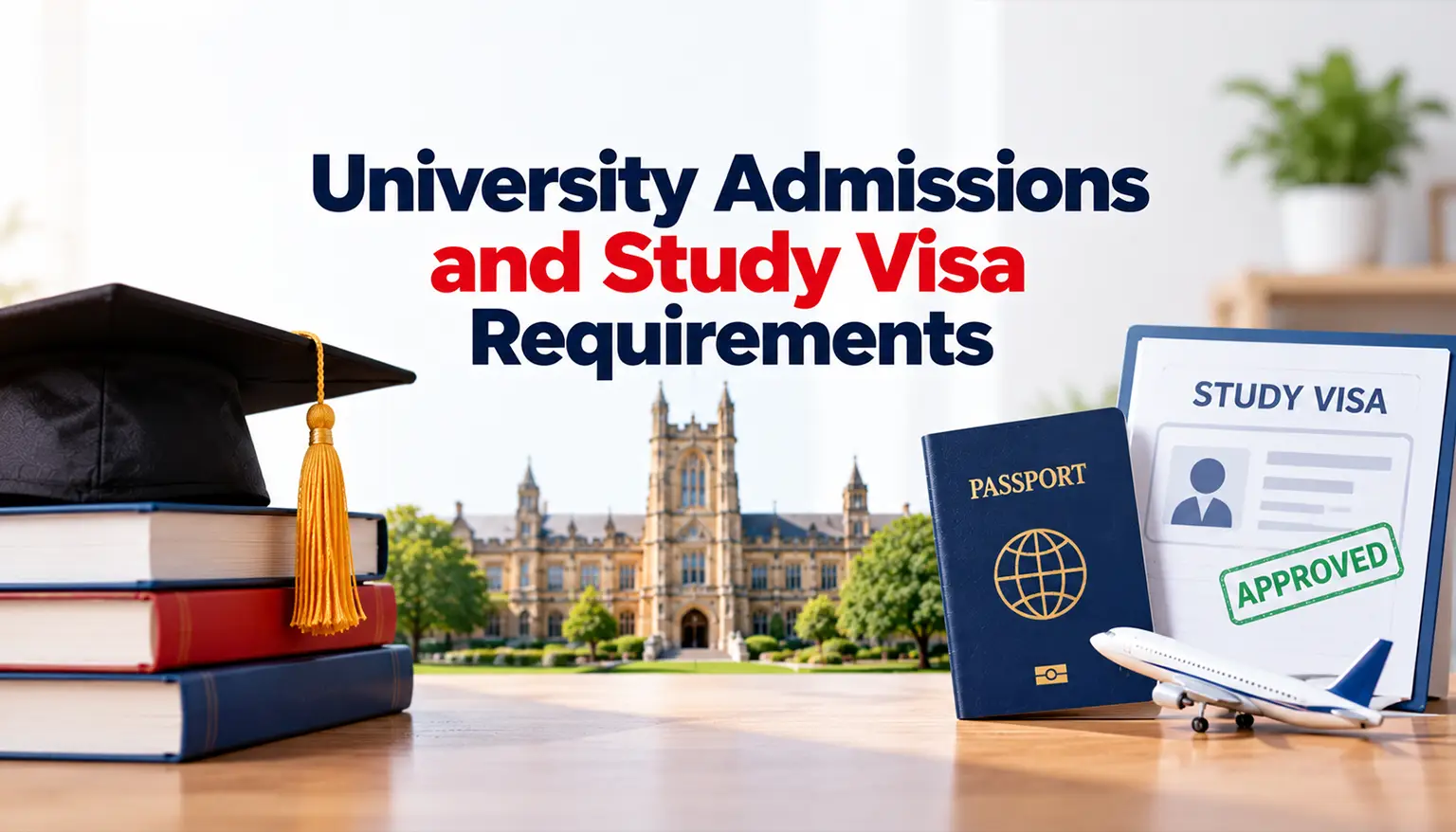
Many universities require IELTS Academic for undergraduate and postgraduate university admissions, although requirements still vary by institution, programme, and subject.
Some courses also set minimum scores for each skill. For example, a university may require a particular Writing score even when your overall result meets the minimum. Check these academic admissions criteria before you register.
Study visa requirements are separate from university rules, so meeting a university’s English requirement does not automatically satisfy a visa authority.
Australia accepts IELTS Academic and IELTS General Training for relevant visa purposes, subject to the applicable test, score and evidence requirements. Student visa applicants should also check their education provider’s English-language admission requirements separately.
Before booking, review the admissions page and the official immigration guidance. This visa application planning step helps you avoid a test that meets only one requirement.
Australia Migration and Permanent Residency Pathways
For Australia migration, check the English rules for your visa subclass, because accepted tests, scores, and evidence differ between skilled, family, and employer-sponsored routes. The same applies to other permanent residency pathways.
These migration visa requirements changed in 2025. For tests taken on or after 7 August 2025, Home Affairs accepts IELTS Academic and IELTS General Training, including One Skill Retake. The test must take place at a secure test centre.
Tests taken entirely online from home are not accepted. Results from tests taken on or before 6 August 2025 may count until 6 August 2028, inclusive, depending on the visa.
Therefore, check the Home Affairs English language requirements and your visa rules before you rely on an older result. IELTS is also only one part of an application.
Canada Immigration and Migration Pathways
For Canada immigration through Express Entry, you must take IELTS General Training if you choose IELTS. IELTS Academic is not accepted.
Canada compares your results with the Canadian Language Benchmarks, and the level you need depends on your programme and sometimes your occupation.
IELTS One Skill Retake is not accepted for Express Entry. In addition, your results must be less than two years old when you complete your profile and when you apply for permanent residence.
Other Canadian programmes, schools, and professional bodies may set different rules. Review the Express Entry language test requirements before you register.
Which IELTS Test Should I Take?
If you are deciding which IELTS test should I take, start with the organisation receiving your result. That is the safest route to practical test selection.
You can follow this short checklist.
- Choose IELTS Academic if your university or professional body requires it.
- Choose IELTS General Training if your immigration programme requires or accepts it.
- Check each requirement separately if you plan more than one pathway.
- Confirm the test name, overall score, skill scores, and result timeframe before you pay.
Student pathways and migration pathways can overlap, and English proficiency certification must match each one. For example, a student may later apply for a visa that needs a different version. Therefore, save the official requirements for each plan.
IELTS Exam Comparison and Exam Difficulty
An IELTS exam comparison often leads to one question, which is whether a general vs academic IELTS test is easier. No single answer fits every candidate.
Some people find General Training Reading more familiar because it uses everyday material. Others prefer Academic Reading because they already read long informational texts.
Writing Task 1 also differs. Academic asks you to describe visual data, while General Training asks for a letter. Your strengths decide which feels easier.
This exam difficulty comparison also has a scoring problem, because Reading conversions differ and comparing raw marks alone can mislead you.
Try official sample questions for both versions if you are unsure. However, make your final choice from the rules, not from perceived difficulty.
Learn With Hafiz can help you prepare for the test you need through focused practice. Start by checking your current level, then build a study plan around your weaker skills.
Score Validity and Exam Preparation Strategies
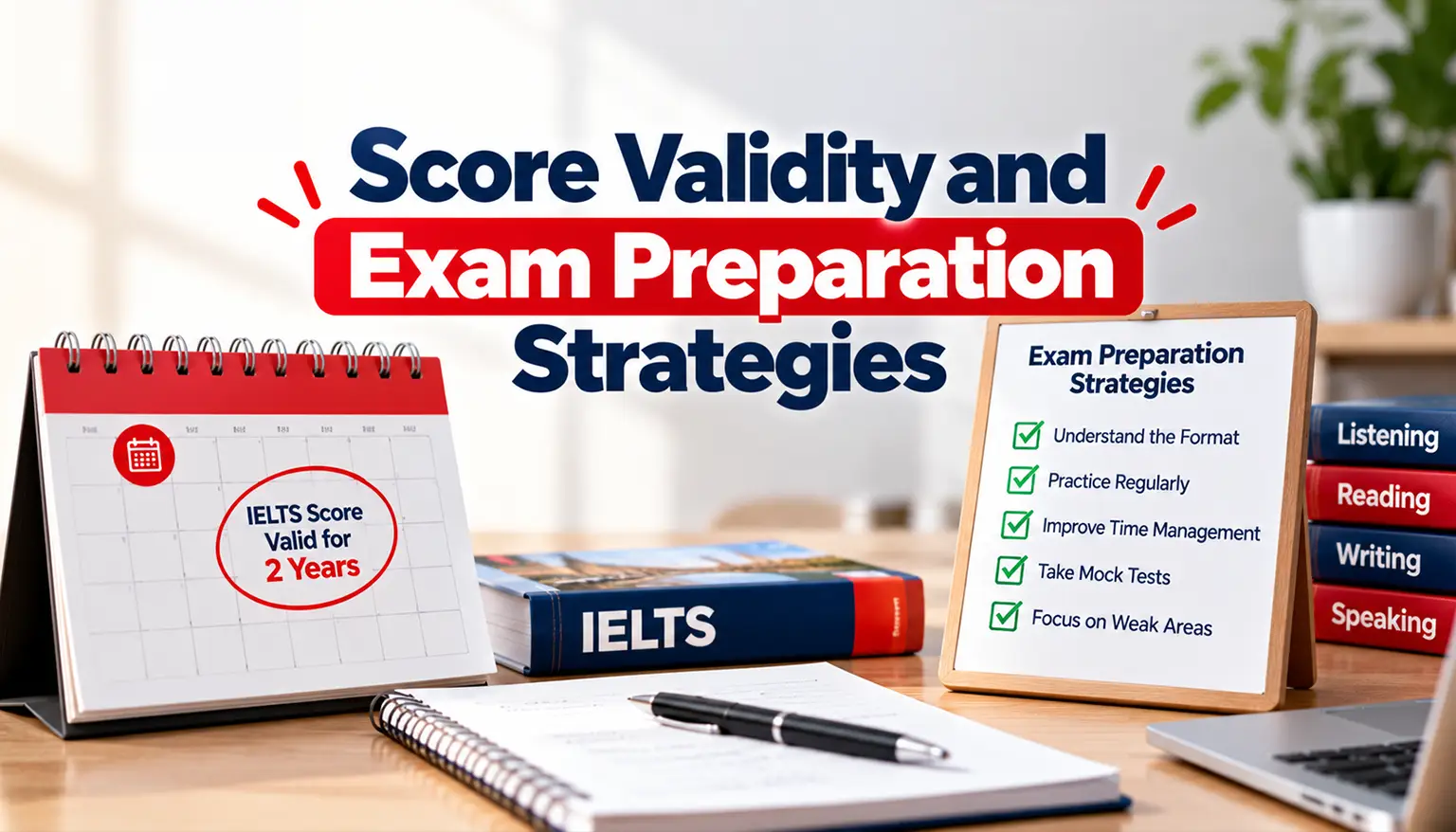
IELTS recommends considering results valid for two years. However, each organisation can set its own policy, so check directly with the institution or authority receiving your results.
Immigration programmes may add specific score validity rules. For example, Express Entry needs results under two years old at both the profile and application stages. Australian rules depend on the test date and visa subclass.
Do not book too early without checking your timeline, and allow time for preparation, result processing, and a possible retake.
A practical student success roadmap has three steps.
- Identify the exact test and score requirements.
- Complete practice questions to find your current level.
- Follow a study plan that targets your weakest skills.
Then match your practice to each skill by using English audio and speaking prompts for Listening and Speaking. For Reading, work on locating details and managing your time carefully. For Writing, practise your version’s tasks and review them against the assessment criteria.
Avoid relying on memorised templates, and instead organise your ideas, answer the question directly, and check your grammar. No course or strategy can guarantee a particular score.
Learn With Hafiz encourages practical improvement rather than shortcuts, so choose materials that match your test type and track your progress regularly.
Conclusion:
The IELTS Academic and General difference mainly concerns purpose and the Reading and Writing tasks. Both tests share the same Listening and Speaking formats, band scale, and assessment approach.
Academic is common for higher education and professional registration, while General Training is common for migration and practical English. However, requirements depend on the institution, visa, or programme.
Before booking, read the official IELTS guidelines and the rules of the organisation receiving your results. For migration, also confirm the test-date, score, and evidence rules with the immigration authority. English proficiency certification only helps when it matches those rules.
Learn With Hafiz can support your preparation once you know which version you need. Review your requirements, choose relevant practice resources, and start your study plan today.
FAQs
What is the difference between academic and general IELTS?
The difference between academic and general IELTS lies mainly in Reading and Writing. Academic suits higher education and some professional registration, while General Training suits practical English and some migration purposes.
Is IELTS General Training easier than IELTS Academic?
Not necessarily, because the tasks differ and candidates have different strengths. Both versions need preparation.
Can I use IELTS Academic for immigration?
In some cases, yes, because Australia accepts it for relevant visas, subject to requirements. However, Canada’s Express Entry requires IELTS General Training, so always check your pathway.
Can I use IELTS General Training for university admission?
It depends on the institution, and many universities require IELTS Academic for degree-level study. Check the admissions criteria before you register.
Are the Listening and Speaking tests different?
No, because both versions use the same Listening and Speaking formats. Only Reading and Writing differ.
How long are IELTS results valid?
IELTS recommends two years. However, the receiving organisation may set its own policy, so check the rules before you submit an older result.
Where can I find official IELTS practice tests?
Visit the official IELTS website for sample questions and preparation resources. Practise the version you need and build a study plan around your level.